I keep coming back to the plain version: when a medical trip already asks a lot of you, adding a daily hunt for food is one task too many.
If you are planning a stay around appointments, family support, follow-up visits, or recovery time, the questions tend to sound familiar: Will I be able to eat on schedule? Can I keep foods that fit my routine? Is there a way to save money without living on vending-machine snacks? What happens when I am too tired to go back out after a long day? A hotel with a kitchenette can answer more of those questions than people expect.
That matters because food choices are not a side issue for many travelers. The World Health Organization says a healthy diet is essential for good health, and the CDC recommends packing healthy snacks and planning ahead when you travel. For medical travelers, that is not a decorative tip. It is a practical way to keep the day from feeling out of control.
Travel trends point in the same direction. As Booking.com’s James Waters put it, travelers are “turning their kitchens into reflections of their journeys.” Expedia also reported that fully equipped kitchens were the top reason business travelers preferred extended-stay accommodations, while Booking.com found that many travelers were leaning toward eating in more often. In other words, the idea is not fringe; it is already part of how people choose a place to stay.
In this guide, I will walk through what a kitchenette usually includes, where it saves money, how it supports better eating, and why it is especially useful when a stay runs longer than expected. If you want the short answer first, here it is: a kitchenette gives you more control, and control is valuable when the rest of the trip is already full of moving parts.
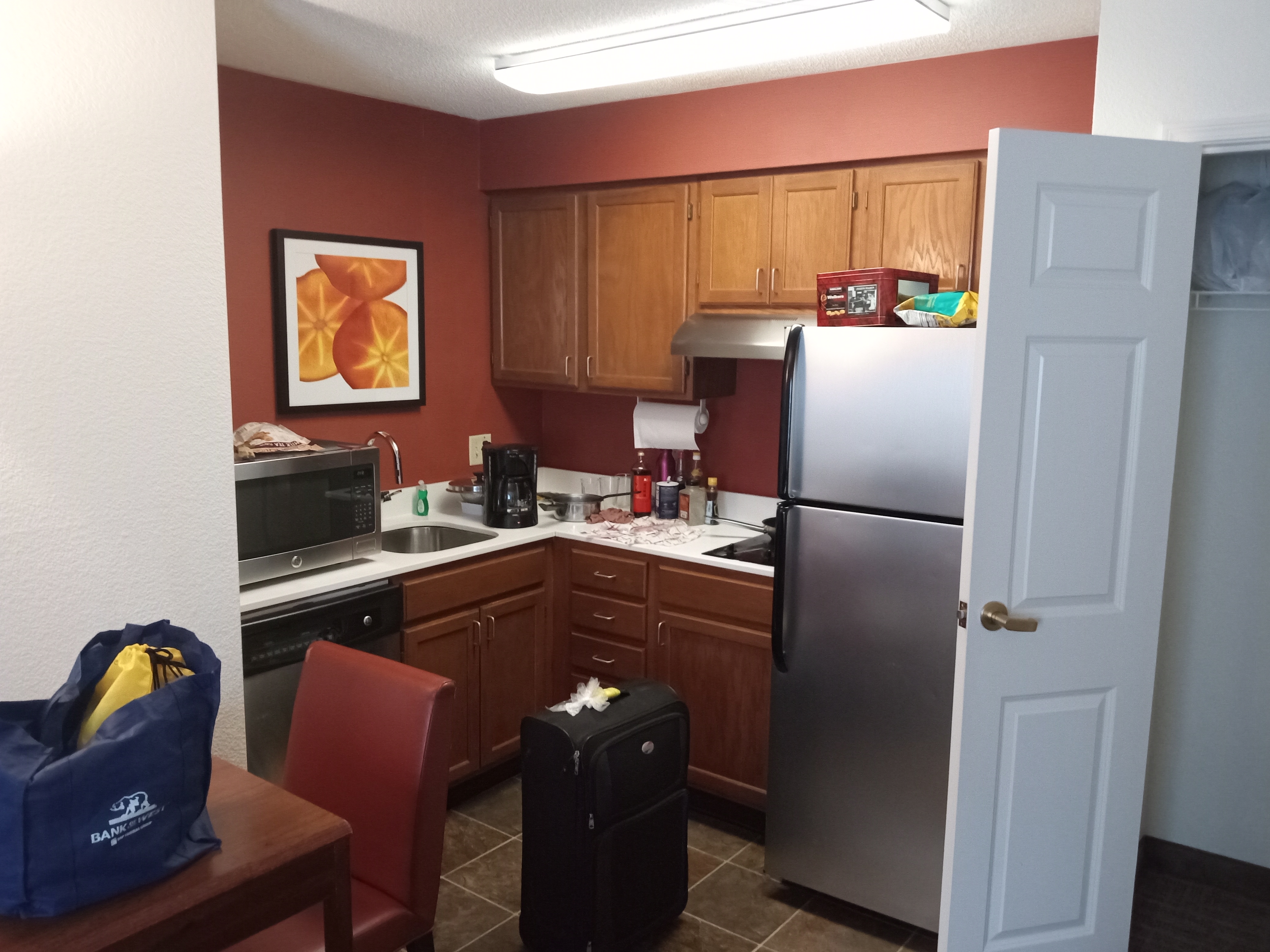
What counts as a kitchenette?
The plain version is simple: a kitchenette is a smaller kitchen setup built for convenience, not a full home-cooking project. In many hotel rooms, that means a mini-fridge, microwave, sink, counter space, and sometimes a two-burner cooktop or a few basic dishes. Some rooms add a coffee maker, small toaster, or storage cabinets. Others are more bare-bones and really only support reheating, cooling, and light prep.
That difference matters. A room with only a microwave is useful, but a room with a fridge, sink, and counter space gives you something closer to a working base. You can keep yogurt cold, rinse fruit, heat leftovers, and put together a quick dinner without balancing everything on a nightstand like you are auditioning for a very unhelpful cooking show.
| Common kitchenette feature | What it usually does | Why it helps medical travelers |
|---|---|---|
| Mini-fridge | Holds drinks, leftovers, breakfast items, and chilled snacks | Makes it easier to keep food ready when appointments run long |
| Microwave | Reheats soup, oatmeal, rice, vegetables, or prepared meals | Lets you eat without waiting on restaurant hours or delivery |
| Sink | Rinses fruit, cleans utensils, and handles basic cleanup | Keeps the room more usable for several days in a row |
| Counter space | Gives you a safe spot for prep and packing | Reduces the odds of making dinner on the edge of the bed |
| Cooktop or hot plate | Handles simple cooking like eggs, pasta, or sautéed vegetables | Offers more meal variety when the stay lasts longer |
Not every hotel calls the same thing a kitchenette, so it helps to check the room description carefully. If you need a specific feature, such as a fridge large enough for several days of food or a cooktop for light cooking, confirm it before you book. A nice-sounding phrase in the listing can be a little too optimistic in practice.
If I were reading a listing with a tired brain and a calendar full of appointments, I would look for three simple clues: the exact appliances listed, whether cookware is included, and whether the room photos actually show the kitchen area. Those details tell you far more than a vague line that says “convenient amenities.” Convenience is great, but specifics are better.
What to verify before you book
- Is there a mini-fridge or a full-size refrigerator?
- Does the room have a microwave only, or also a cooktop?
- Are utensils, plates, bowls, and cookware included?
- Is there enough counter space to prep a simple meal?
- Are there grocery stores or pharmacies nearby if you need to restock?
These questions are small, but they save you from arriving with a plan that only works if the room has more than a decorative counter and a coffee maker. The best kitchenette is the one that fits the way you actually travel, not the way a brochure hopes you will travel.
Why does a kitchenette save money?
The cost savings are usually easier to feel than to calculate. When you are traveling for medical care, you may not want a big restaurant breakfast, a long lunch, and another dinner out just because those are the only convenient options nearby. A kitchenette lets you replace some of those meals with simple, lower-cost choices you can keep on hand.
That can matter a lot on a stay that lasts more than a night or two. Expedia reported that fully equipped kitchens were the top reason business travelers preferred extended-stay accommodations, at 45 percent. Booking.com also reported that 46 percent of travelers planned to eat in more often, and that a well-equipped kitchen would be essential for many trips. Those are not medical-traveler-only numbers, but they show that food flexibility is a real booking factor.
The savings are usually boring in the best way. You are not trying to make gourmet dinners in a tiny room. You are trying to keep your budget from leaking out in the form of coffee shop runs, takeout dinners, and “I just need one more snack” purchases. The kitchenette is less about grand culinary ambition and more about not paying restaurant prices for every meal of a stressful week.
Simple meal examples that actually fit a hotel stay
- Early appointment breakfast: oatmeal, banana, and coffee made in the room so you do not have to leave before sunrise.
- Light lunch between visits: a turkey sandwich, cut fruit, and yogurt from the mini-fridge.
- Easy dinner after a long day: microwaved rice, rotisserie chicken, and a bagged salad.
- Gentle snack when you are tired: crackers, soup, applesauce, or peanut butter on toast.
Those may not sound exciting, and that is the point. When someone is traveling for medical reasons, the food goal is often not excitement. It is steadiness. A kitchenette gives you a way to eat decently without turning every meal into an outing.
One more practical angle: if you use the kitchenette to build even a modest breakfast-and-snack routine, you can save the restaurant budget for the meals that really matter, such as a family dinner after a hard appointment or one day out when everyone needs a break. That is where the room starts paying for itself.
How does a kitchenette support health and dietary needs?
This is the part medical travelers often care about most, even if they do not say it out loud right away. When you can prepare some of your own food, you get more say over salt, sugar, portion size, ingredients, and timing. That can be helpful if you are following a special diet, avoiding certain foods, or simply trying to keep your energy steady during a busy schedule.
The CDC’s travel guidance for people managing diabetes includes reminders to bring healthy foods, find healthy options, and plan medicine and supply storage. Even if diabetes is not your situation, the logic is familiar: a trip goes more smoothly when you do not have to improvise every meal.
The CDC’s food and water safety guidance for travelers is another reminder that travel can make food choices less predictable. Having a kitchenette does not remove every risk, but it can reduce how often you have to depend on unknown ingredients, unfamiliar preparation methods, or meal timing that does not fit your body’s schedule.
For medical travelers, the biggest win is often not a specific recipe. It is the ability to keep a routine. If you are used to breakfast at 7 a.m., a snack after a procedure, or a light dinner before a test, a kitchenette lets the room work with that plan instead of against it.
Why the control matters
- Ingredient control: you decide what goes into the meal.
- Timing control: you can eat when your schedule allows, not when a restaurant is open.
- Portion control: you can make a light meal instead of settling for a heavy one.
- Comfort control: you can stick with familiar foods when your day already feels unfamiliar.
If your care team has given you dietary instructions, follow those first. The kitchenette is a convenience tool, not medical advice in a cabinet. Still, for many travelers, it becomes the simplest way to stay close to the routine that keeps them feeling like themselves.
Why is it so useful for longer stays?
A one-night stay and a five-night stay are different animals. On a quick trip, a kitchenette is a nice bonus. On a longer trip, it can change the shape of the whole stay. Once you have a fridge, sink, and a small prep area, the room stops feeling like a place where you merely sleep and starts feeling like a temporary base you can actually live in.
That home-like feeling matters more than people admit. When you are away for medical reasons, you may spend enough time in waiting rooms, lobbies, or clinics already. It helps to come back to a space where you can store leftovers, heat soup, wash a spoon, and make coffee without another errand. Small comforts are not small when the rest of the day is demanding.
It also makes logistics simpler. Leftovers do not go to waste as quickly. Breakfast can be ready before a ride arrives. Snacks stay close at hand. And if you end up resting more than expected, you are not forced to solve the “what do we eat?” puzzle three times a day. That puzzle gets old faster than most hotel carpet patterns.
For readers comparing room styles, our services page is a good place to start if you want to see the kinds of stay-focused details that matter when you are choosing lodging for a medical trip.
Tips for making the most of a hotel kitchenette
- Check the exact setup before you book. A “kitchenette” can mean a fridge and microwave, or it can mean a more complete setup with a cooktop and dishes.
- Pack two or three starter foods. Shelf-stable oatmeal, crackers, tea, or instant soup can make the first night easier.
- Build a tiny meal plan. Choose one breakfast, one lunch, and one dinner option you can repeat instead of winging it every time.
- Ask what cookware is included. It is a lot easier to make pasta when you know whether there is a pot waiting for you.
- Use the fridge for the boring basics. Fruit, yogurt, cheese, drinks, and leftovers are often the unsung heroes of longer stays.
- Look up nearby grocery and pharmacy options. A kitchenette works best when you know where to restock without a long drive.
If you are traveling with family, these tips can help everyone settle in faster. A kitchenette may not sound glamorous, but neither does paying for a lukewarm sandwich at 9 p.m. when all you want is a quiet room and a clean plate.
Who gets the most value from a kitchenette?
Almost anyone can appreciate a kitchenette, but some travelers get a much bigger payoff from it. That usually happens when the trip is longer, the schedule is less predictable, or the traveler needs more control over food than a standard hotel setup can offer.
People on multi-night medical trips. If you are staying several nights for tests, procedures, follow-up visits, or to support a loved one, a kitchenette can cut down on the repeated cost and hassle of eating out every day. Even simple food storage becomes helpful when your energy is being spent somewhere else.
Travelers with food preferences or restrictions. Some people need lower sodium. Some avoid certain allergens. Some feel better with smaller meals and familiar ingredients. A kitchenette does not solve every food issue, but it gives you a much better shot at eating in a way that fits your needs.
Families who are juggling more than one person’s schedule. If one person has an appointment at 7 a.m. and another needs a quiet evening with a snack and a movie, a kitchenette can keep the whole group from feeling like they are operating on restaurant hours. That is especially helpful when children, older adults, or caregivers are part of the trip.
Anyone who gets tired of takeout fast. This is a more common category than people admit. After the second or third meal out, even a decent restaurant can start to feel like another item on the to-do list. A kitchenette gives you the option to opt out and keep things simple for a night.
A few realistic room-to-table combinations
If you want to picture how this works in real life, here are a few easy combinations that fit the kind of stay medical travelers often have:
- Morning appointment day: oatmeal, fruit, and coffee before you leave the room.
- Afternoon follow-up day: soup and toast when you get back and do not want a heavy meal.
- Recovery evening: microwaved rice, pre-cooked chicken, and steamed vegetables from a grocery store stop.
- Low-energy snack plan: yogurt, apples, nuts, and crackers kept ready in the fridge.
That kind of planning is not fancy, but it is effective. The goal is not to become a short-order cook in a hotel room. The goal is to remove one more source of friction from a trip that may already have enough of them.
What should medical travelers remember before booking?
The easiest mistake is to treat kitchen access like a small perk. For a medical traveler, it can be a planning tool. It shapes your budget, your food choices, your schedule, and how much you have to leave the room when you would rather stay put. That is why I would put it near the top of the booking checklist, not near the bottom.
Here is the quick version:
- Kitchenettes reduce food stress.
- They make it easier to stay on a healthy routine.
- They can lower meal costs over several nights.
- They are especially helpful when appointments stretch a stay beyond the original plan.
If you want one simple test, ask yourself this: would the trip feel easier if I could make breakfast in the room and keep a few reliable foods on hand? If the answer is yes, a kitchenette probably belongs on your must-have list.
For more helpful lodging and travel ideas, you can also browse the blog index. It is a good place to keep gathering the small details that make a medical trip less tiring and a lot more manageable.
Final takeaway
Booking a hotel with a kitchenette gives medical travelers three big advantages: cost savings, better dietary control, and everyday convenience. It also creates a little room for normal life inside an otherwise busy trip, which is often the real luxury. When meals are easier, the rest of the day tends to feel less complicated too.
Key points to remember:
- A kitchenette usually includes a fridge, microwave, sink, and some prep space.
- Simple meals in the room can save money over several nights.
- Having food control is especially helpful when you are managing health needs or dietary restrictions.
- Long stays feel easier when you can store snacks, reheat leftovers, and keep a steady routine.
If you are comparing hotel options for a medical trip, I would treat kitchenette access as one of the first questions to answer. It is a small feature on the booking page, but on the road it can make a very large difference.